by P. Birmingham
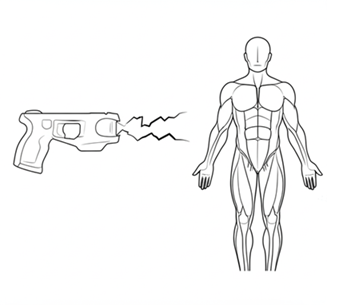 In recent years, personal safety tools have advanced significantly—from pepper sprays to sophisticated electroshock weapons. Among these, devices that use neuromuscular incapacitation (NMI) stand out for their unique ability to temporarily disable an assailant without causing lasting harm. Popularized through stun guns and conducted electrical weapons (CEWs) like TASERs, NMI is often misunderstood by the public and even some professionals.
This post goes beyond the spark and arc of these devices to uncover the science, engineering, and real-world implications behind neuromuscular incapacitation. Whether you're a civilian considering non-lethal protection, a law enforcement professional, or a curious technophile, this deep dive will help you understand how and why NMI works—and the limits of its power.
1. What Is Neuromuscular Incapacitation?
Neuromuscular incapacitation is a process that overrides the body's voluntary muscle control by delivering high-voltage, low-current electrical pulses that stimulate motor nerves. This causes uncontrollable muscle contractions, effectively disabling movement.
Key elements of NMI:
-
Non-lethal but effective: NMI is designed to incapacitate, not to injure or kill.
-
Temporary: Effects usually last only while the current is applied and subside within minutes.
-
Involuntary response: The subject can’t fight through the effects using mental focus or physical strength.
In essence, NMI hijacks the communication between the brain and muscles—like pulling the plug on a puppet master.
2. The Evolution of Electroshock Weapons
The history of electroshock devices stretches back decades, but only recently has technology enabled the consistent delivery of effective NMI.
Early inventions:
-
The first crude stun devices appeared in the 1960s.
-
Early models were pain-compliance tools, delivering shocks that hurt but didn’t reliably incapacitate.
TASER revolution:
-
In the 1990s, Tom and Rick Smith launched TASER International, aiming to create a device that could safely stop violent suspects.
-
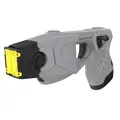
The X26 and later X2 TASER models used shaped electrical pulses to achieve full NMI, revolutionizing law enforcement engagement.
Now, both law enforcement and civilians have access to varying degrees of electroshock tools. Some deliver just pain compliance, others full NMI.
3. Electrical Energy and the Human Body
To understand NMI, you need to grasp how electricity interacts with the body.
-
Voltage (V): The force that pushes the current.
-
Current (A): The amount of electricity flowing.
-
Frequency (Hz): The rate at which pulses are delivered.
-
Duration: How long the current is applied.
Contrary to popular belief, it’s not the voltage that’s dangerous—it's the current. For NMI to work safely, devices must deliver:
-
High voltage (often up to 50,000 volts) to penetrate clothing and skin.
-
Low current (typically under 2 milliamps) to avoid lethal effects.
The electric pulses disrupt the central nervous system's communication pathways. Muscles receive conflicting signals and seize up, leading to instant loss of coordination.
4. How Stun Guns and CEWs Deliver NMI
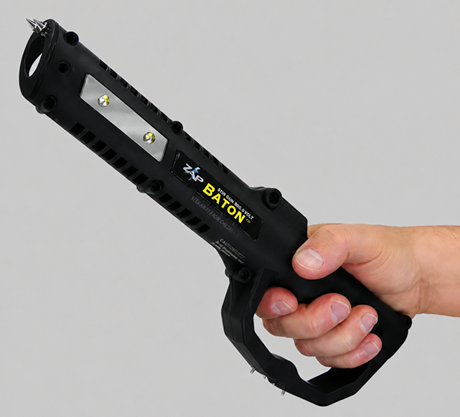
While both stun guns and conducted electrical weapons can deliver shocks, only some produce true neuromuscular incapacitation.
Stun guns:
-
Require direct contact.
-
Rely on pain and, in some cases, limited NMI.
-
Effective against exposed skin or thin clothing.
TASER-style CEWs:
-
Fire two dart-like electrodes connected by wires.
-
Deliver electrical pulses through a broader area of the body.
-
Create a loop of current across muscle groups to achieve full NMI.
Advanced models also feature:
-
Pulse modulation for better muscle engagement.
-
Data logging for evidence and accountability.
-
Smart cartridges that regulate spread and effectiveness.
5. The Difference Between Pain Compliance and NMI
Understanding the distinction between pain and incapacitation is crucial.
| Feature |
Pain Compliance |
Neuromuscular Incapacitation |
| Mechanism |
Activates sensory nerves |
Stimulates motor nerves |
| Result |
Causes pain |
Causes muscle lock-up |
| Can be resisted? |
Yes, especially with high pain tolerance |
No, muscle contraction is involuntary |
| Contact required |
Yes |
No (for projectile CEWs) |
| Works through clothing |
Limited |
Yes |
In short, NMI forces the body to shut down movement, regardless of willpower.
6. Scientific Studies and Effectiveness
Over the years, scientists and law enforcement agencies have conducted numerous studies on the effectiveness and safety of NMI.
Effectiveness:
-
In over 90% of police use-of-force scenarios, TASER devices effectively incapacitated suspects.
-
Studies show that even individuals under the influence of drugs or suffering from mental illness can be stopped with NMI, while pain-based tools often fail.
Safety:
-
Numerous peer-reviewed studies confirm that NMI devices are generally safe when used correctly.
-
Adverse effects are rare and usually related to secondary injuries (e.g., falling) or underlying health issues.
-
According to the American College of Emergency Physicians, short-duration CEW exposures do not cause cardiac complications in healthy individuals.
Still, every tool has risks, especially when misused.
7. Real-World Use Cases
Let’s look at real-world examples of NMI in action:
Law Enforcement:
-
A suspect armed with a knife ignores verbal commands. A CEW is deployed. Within seconds, the suspect drops to the ground, muscles locked. No officer injuries, no gunfire—de-escalation achieved.
-
During riots, stun guns help control aggressive individuals without escalating the violence or risking lethal outcomes.
Civilian Self-Defense:
-
A woman walking to her car is approached by a potential assailant. She draws a stun gun and makes contact with the attacker’s shoulder. The attacker collapses briefly, giving her time to escape.
-
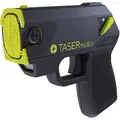
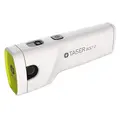
A civilian using a TASER Pulse model hits an intruder. The assailant crumples immediately and cannot pursue, buying time to call the police.
These cases show the power of incapacitation over confrontation.
8. Risks and Controversies
Despite their benefits, NMI devices are not without controversy.
Risks:
-
Falls: A suspect who collapses uncontrollably may hit their head or suffer fractures.
-
Health complications: People with heart conditions or under drug influence may face elevated risks.
-
Misuse or abuse: Using NMI for compliance rather than defense can cross legal and ethical lines.
Controversies:
-
Deaths in custody: Some fatalities occurred after CEW use, often due to other causes like excited delirium or restraint issues—but they’ve fueled public concern.
-
Excessive force: Cases of multiple or prolonged exposures have sparked legal battles and media scrutiny.
-
False sense of safety: Some civilians may rely too heavily on their devices without understanding how to properly use them.
Training and proper deployment remain critical.
9. Legal and Ethical Considerations
The legality of NMI devices varies by region.
In the United States:
International laws:
Ethical use:
-
Civilians should only use these devices for defense.
-
Misuse can lead to criminal charges, including assault.
Responsibility lies with the user. Understanding the law, training in proper use, and de-escalation techniques are essential.
10. Future of Non-Lethal Weapons
As technology evolves, so do NMI devices.
Innovations on the horizon:
-
Wireless CEWs: In development, these can incapacitate at greater distances without wires.
-
Smart targeting systems: Using AI to improve aim and reduce missed shots.
-
Biometric feedback: Monitoring vital signs to prevent overexposure or injury.
-
Wearable defenses: Shock-delivering wearables integrated into clothing.
There's growing interest in combining NMI with other technologies like GPS tracking, alarms, and video documentation for comprehensive defense systems.
11. Conclusion: The Role of NMI in Modern Self-Defense
Neuromuscular incapacitation represents a breakthrough in humane force. By disabling without destroying, it offers a critical option between yelling for help and lethal force. However, the science behind NMI isn’t just fascinating—it’s essential for responsible ownership and deployment.
In a world where violence can erupt without warning, understanding how and why your tool works can be the difference between panic and preparedness. NMI isn’t magic—it’s biology, physics, and engineering working in tandem.
Before carrying a stun gun or CEW:
-
Understand your local laws.
-
Practice with your device.
-
Know when and how to use it.
-
Always aim for de-escalation first.
Beyond the arc lies knowledge—and with knowledge comes power and responsibility.
See cost of TASERs and Stun Guns