by P. Birmingham
 If you rent your home, you face a security reality that homeowners often don't. Renters are statistically more likely to be the victims of break-ins than homeowners, and apartment buildings with two to four units typically see the highest concentration of burglaries of any residential structure type. Yet according to recent industry research, renters are also less than half as likely to install a home security system compared to homeowners — often because of perceived lease restrictions, cost concerns, or the assumption that "the building's locked, so I'm safe."
The numbers tell a different story. There were roughly 779,542 burglary incidents reported in the United States in 2024, and the average loss per case exceeded $2,600. A break-in lasts only 8 to 12 minutes from start to finish — and the actual entry phase is completed in under 60 seconds. By the time you wake up to an unfamiliar sound at 3 a.m., the intruder is already inside.
So what do you actually do in those critical seconds between waking up and the moment a stranger reaches your bedroom door?
That question is what this guide is about. And after weighing the realistic options — firearms, pepper spray, handheld stun guns, knives, baseball bats — the answer that comes out on top for most apartment dwellers is something a lot of people overlook: a stun baton kept within arm's reach of the bed.
Why Apartments Change the Self-Defense Math
Self-defense tools that work great in a 2,500 square-foot house don't always make sense in a 700 square-foot apartment. Five factors specific to apartment living shape the right choice:
1. Distance is short. In a typical apartment, the distance from your bed to an intruder coming through the bedroom door is six to fifteen feet. By the time you process the threat, sit up, and reach for a tool, you may have one to three seconds before contact.
2. Walls are shared. What's behind the wall behind your attacker? In a house, usually nothing important. In an apartment, it's a neighbor — possibly asleep with their kids. This is a serious problem for firearms, where standard handgun rounds easily penetrate multiple layers of drywall. Less-lethal tools eliminate this risk entirely.
3. Storage is limited. Apartments rarely have gun safes, dedicated weapon storage, or even sturdy nightstands. Your defense tool needs to be safe to leave out, safe around guests, and safe if you have a roommate.
4. Lease restrictions matter. Many leases prohibit firearms on the property. Few mention less-lethal tools.
5. Confined space favors reach. Inside a hallway or bedroom doorway, an intruder can close the distance to you in less than a second. The tool that helps you most is one that creates standoff distance — letting you defend yourself before they're close enough to touch you.
These five factors, taken together, eliminate or weaken most of the popular self-defense options for the specific bedside-defense use case. Let's walk through them.
The Bedside Options, Honestly Compared
Firearms
The most powerful self-defense option, but also the one with the most apartment-specific drawbacks. Wall penetration is the biggest concern: a missed shot can travel through two or three walls and reach a neighbor. Storage is another issue — leaving a loaded firearm on a nightstand is unsafe around guests, children, or roommates, but locked storage adds critical seconds to your response time. Lease restrictions often prohibit firearms outright. And the legal aftermath of a fatal shooting, even one that's clearly justified, is profoundly life-altering.
For homeowners with the right training, legal context, and storage setup, firearms remain a legitimate choice. For most apartment dwellers, the tradeoffs are harder to justify.
Pepper Spray
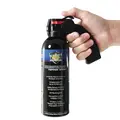
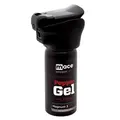
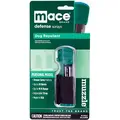
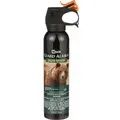
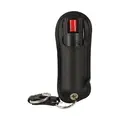
Pepper spray is excellent for outdoor and pre-confrontation use, but it has real limitations in a small indoor space. The spray plume affects everyone in the room — including you. In a closed bedroom, blowback can incapacitate the defender along with the attacker. Pepper spray also lacks reach beyond about 6-10 feet and provides no impact capability if the spray fails to stop the threat.
Pepper spray belongs in your purse, your car, or your front door area. It's not the right primary tool for an intruder already in your bedroom.
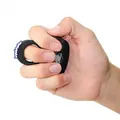
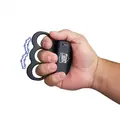
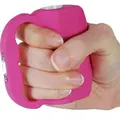
Handheld Stun Guns
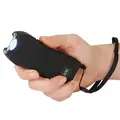
Compact stun guns are great everyday-carry tools, but the small form factor that makes them ideal for a pocket is a liability for home defense. A handheld stun gun requires you to be within arm's length — about 18 inches — of your attacker. That's inside their striking range too. If you're going to deploy electrical incapacitation, you want to do it from farther away.
Baseball Bats and Improvised Tools
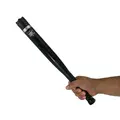
A baseball bat is a real impact weapon, but it's also a single-use blunt-force tool. There's no electrical deterrent effect, no flashlight, no ability to stop a threat without committing to a full swing. In a small bedroom, you may not even have room for a full swing. And if the bat is taken from you, it becomes the attacker's weapon.
Stun Batons
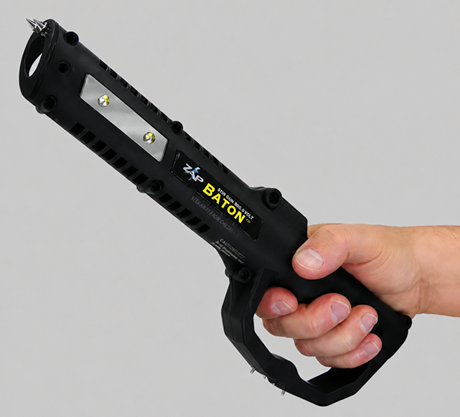
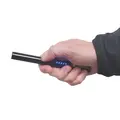
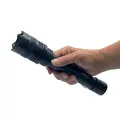
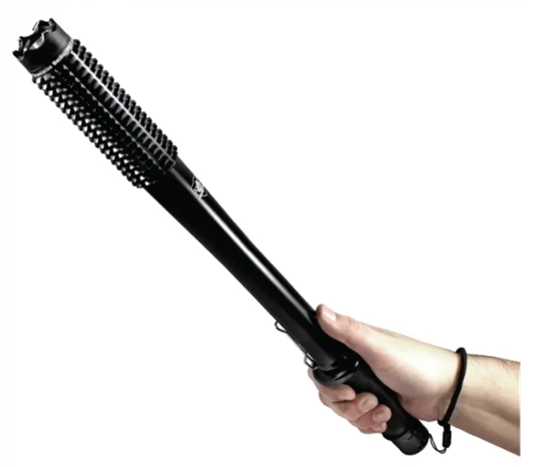 Stun batons combine the reach and impact capability of an extendable baton with the electrical incapacitation of a stun gun, typically with an integrated LED flashlight. At 12 to 19 inches in length, they give you genuine standoff distance — far enough that you can deploy them before the attacker can touch you, but short enough to swing in a confined space.
The combination matters. The sound and visible electrical arc of an activated stun baton has been documented to stop many attacks before contact is even made — the audible crackle of high-voltage current is a powerful psychological deterrent. If that doesn't work, the baton itself can be used to strike or block. If that doesn't work, the electrical contacts deliver an incapacitating shock. Three layers of response in one tool, deployable in under a second from a bedside position.
For apartment defense specifically, that combination of features is hard to beat.
The Eight Features That Make a Stun Baton Right for Bedside Defense
1. Reach. An 18-inch stun baton extends your effective defense zone by roughly the same distance. Combined with your arm length, you're operating with a four-to-five-foot total reach — enough to keep an attacker outside arm's length and out of grappling range.
2. Visual and audible deterrence. When you press the activation button, a stun baton produces a loud electrical crackle and a visible blue arc. In a dark apartment at 3 a.m., that's genuinely terrifying to an intruder who expected a sleeping target. Many confrontations end at this point without further escalation.
3. Integrated flashlight. Most quality stun batons include a high-lumen LED flashlight in the head. This solves two problems at once: identifying what's actually happening in your dark apartment (was that a sound or an actual intruder?), and disorienting an attacker by shining 100+ lumens into their eyes.
4. Non-lethal force. A stun baton incapacitates without killing. This matters for three reasons: it dramatically simplifies the legal aftermath, it removes the moral weight of having taken a life, and it means an accidental discharge or wrong-target deployment doesn't have catastrophic consequences.
5. No wall-penetration risk. Electrical contact requires physical contact. Your defensive force cannot pass through your bedroom wall into your neighbor's living room.
6. Safe to keep accessible. Unlike a loaded firearm, a stun baton with the safety on is reasonably safe to leave on a nightstand or under the bed. Most quality models include a safety switch and a disable pin to prevent accidental activation.
7. Grab guards. Higher-end stun batons include "grab guard" or "anti-grab" strips along the shaft — additional electrical contacts that shock anyone who tries to wrest the baton from your hand. This is a real concern with any impact weapon, and stun batons solve it elegantly.
8. Affordable and lease-friendly. Quality stun batons typically cost between $30 and $80 — a fraction of even a budget firearm and the associated training, ammunition, and safe storage. No registration is required in most states. No lease provision prohibits them in any jurisdiction we're aware of.
What to Look for in a Bedside Stun Baton
Not all stun batons are created equal. For specifically bedside, apartment-defense use, here are the features that matter most:
Length: 12 to 19 inches. Long enough for meaningful reach, short enough to swing in a hallway or bedroom without hitting a wall or ceiling fan. Tactical batons in the 24-26 inch range provide more reach but are awkward in small spaces.
Material: aircraft-grade aluminum. The baton has to be sturdy enough to use as an impact weapon without bending or breaking. Cheap plastic-bodied models are unsuitable for serious defense.
Rechargeable battery. A defensive tool that depends on disposable batteries you might have forgotten to replace is a defensive tool that may not fire when you need it. Modern rechargeable models hold a charge for months on standby.
LED flashlight: 100 lumens or higher. Bright enough to identify threats and disorient an attacker. The single best feature for the realistic 3 a.m. scenario where you're not sure if you actually heard something.
Safety switch and disable pin. Two-step activation prevents accidental discharge and ensures that if the baton is taken from you, the attacker can't immediately use it against you.
Grab-guard / anti-grab strips. Electrified strips along the shaft that shock anyone gripping it improperly. A meaningful upgrade over models that only have contacts at the tip.
Non-slip grip and wrist strap. Adrenaline makes your hands shake. A textured rubber grip and a wrist strap that prevents the baton from being dropped or knocked away are not optional features.
Holster included. A nightstand-mounted or bed-frame-mounted holster keeps the baton in a predictable location and prevents it from rolling off in the night.
A Realistic Bedside Defense Plan
Buying a stun baton is the easy part. Building a defense plan around it is what makes the purchase actually useful. Here's a framework most apartment dwellers can implement in an afternoon:
1. Layered deterrence. Your stun baton is the last line, not the first. Start with strong locks (or lease-approved upgrades like deadbolt reinforcement plates), a door jammer or portable door brace for added overnight security, a video doorbell or peephole camera, and a basic motion-activated alarm. Most burglars look for easy targets and move on when they encounter even modest resistance.
2. Bedroom as the safe room. Your bedroom door should have a working lock. If a stranger is in your apartment at night, your goal is not to confront them — it's to barricade your bedroom, call 911, and use the stun baton only if they breach the door. The vast majority of nighttime burglars do not want a confrontation and will flee at the first sign you're awake.
3. Predictable storage location. The stun baton goes in the same place every night. Under the bed in a holster, on the nightstand, or in a bed-frame mount. Not on the dresser across the room. Not in the closet. If you have to think about where it is, you'll fumble in the dark when it matters.
4. Practice activation in the dark. Once a month, practice picking up your stun baton in the dark, disengaging the safety, and activating the test fire. You should be able to do this in under two seconds without looking. If you can't, you need more practice — not a different tool.
5. Know what 911 looks like at 3 a.m. Dispatchers expect coherent, brief information. Practice the script: "I'm at [address], apartment number [X]. There is an intruder inside my apartment. I am barricaded in my bedroom. I need police immediately." If you've used your stun baton: "I defended myself with a non-lethal stun baton. The intruder is incapacitated/fled."
6. Understand your local laws. Stun batons are legal in most U.S. states, but laws vary. Some states require the baton to remain on your property; others allow open carry; California prohibits civilian ownership entirely. Verify before purchasing.
The Legal Aftermath: Less-Lethal Doesn't Mean Consequence-Free
Using a stun baton against an intruder, even one who broke into your home, can still trigger a police investigation, possible criminal review, and potential civil liability from the attacker or their family. The good news: justified use of a less-lethal tool inside your own home, against an intruder who forcibly entered, is one of the most legally defensible self-defense scenarios in American law — covered by the Castle Doctrine in nearly every state.
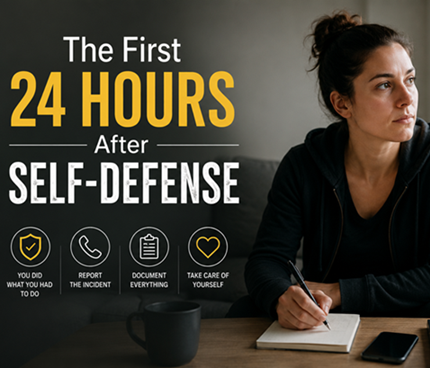
Still, the moments and hours after any defensive incident matter enormously. Call 911 yourself and first. Make yourself non-threatening when police arrive — the stun baton should be put down well before they enter. Identify yourself as the victim. Then invoke your right to counsel and let your attorney guide what happens next.
If you carry or keep any defensive tool, consider a self-defense legal protection plan in advance. Programs like USCCA, U.S. LawShield, and Armed Citizens' Legal Defense Network provide 24/7 attorney access and legal cost coverage — and most cover less-lethal incidents, not just firearms.
The Bottom Line for Apartment Dwellers
Apartment defense is its own category of self-defense problem, and most popular tools weren't designed with apartment dwellers in mind. Firearms carry wall-penetration and storage risks. Pepper spray blowback is a real problem indoors. Handheld stun guns require you to be too close to your attacker. Baseball bats are crude and easily disarmed.
A quality stun baton, kept in a consistent location within arm's reach of your bed, deployed with the help of a built-in flashlight, gives apartment dwellers genuine standoff distance, multi-layered defensive options (deterrence, strike, shock), and minimal collateral risk to neighbors. It's affordable, requires no permit in most jurisdictions, and is legal to own in 49 states.
Pair it with strong locks, a barricadeable bedroom door, a practiced 911 script, and a basic awareness of your local laws — and you have a realistic, layered apartment security plan that doesn't depend on hoping the building's front-door lock holds.
Hopefully, you'll never need any of it. But if you do, you'll be glad you thought about it before 3 a.m. instead of after.