by P. Birmingham
I spend a lot of time looking at self-defense products — comparing specs, reading manufacturer data, and thinking about what actually makes sense for the person carrying it. So when a new stun baton comes across my desk that does a few things differently than what's already out there, I like to talk about it.
That's the case with the
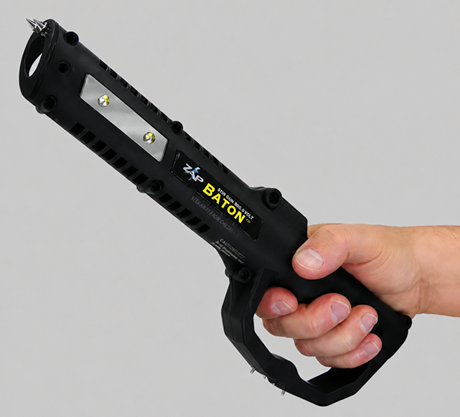
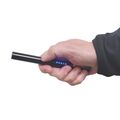
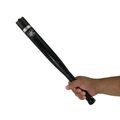
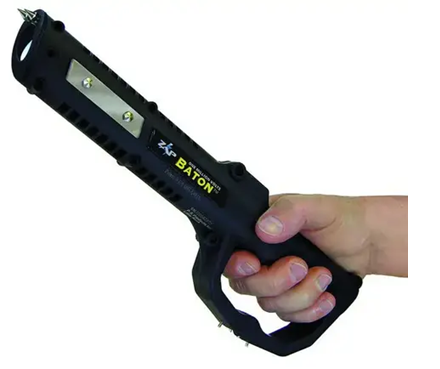
ZAP Baton Stun Gun with Flashlight, which we just added to the site. I haven't personally put this one through its paces yet, so consider this less of a review and more of an introduction — a breakdown of what it is, and why the design choices behind it caught my attention enough to want you to go take a look for yourself.
The Problem With Most Stun Batons
If you've shopped for a
stun baton before, you've probably noticed that most of them follow the same basic formula: a long handle, a single stun contact point at the tip, and maybe a flashlight bolted on as an afterthought. That formula works, to a point. Extended reach is genuinely valuable — keeping distance between you and a threat is one of the smartest things a self-defense tool can offer. But a single point of contact at the very tip means everything depends on you landing that one spot, under stress, possibly in low light, possibly with someone actively resisting or grabbing at the device.
That's the gap that seems to have shaped how the ZAP Baton was engineered.
What's Actually Different About the ZAP Baton
The first thing that stood out to me in the spec sheet is the 4-point contact system. Instead of relying solely on the tip, the ZAP Baton places stun contacts at the tip, along the side panels, and on the handle guard itself. In practical terms, that means there are more opportunities for effective contact during an actual encounter — you're not limited to one precise strike zone. Anyone who's thought seriously about how self-defense situations actually unfold knows that "aim perfectly under pressure" is not a realistic expectation. Spreading the contact points out is a much more grounded approach to real-world use.
The second detail worth pointing out is the side shock plates running along the shaft and handle guard. This is a feature you don't see on a lot of standard batons, and it solves a specific, often-overlooked problem: what happens if an attacker grabs the baton itself. A baton that can be easily seized and wrestled away is a liability, not a tool. By electrifying the sides — not just the striking end — the ZAP Baton is designed to discourage that grab in the first place.
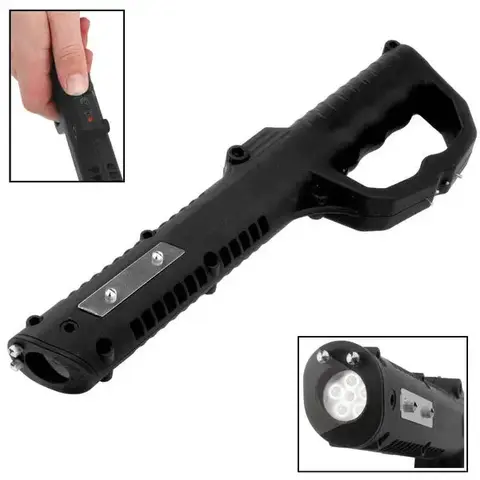 Then there's the handle guard, which does double duty. It's built to protect your own hand during use, but it's also usable as an impact tool in its own right. That's a small design choice, but it reflects a "more than one way to defend yourself" mentality rather than a single-function device.
The Flashlight Isn't Just Tacked On
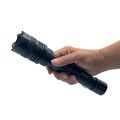
A lot of "stun gun with flashlight" products treat the light as a bullet point, not a real feature. Here, the LED flashlight actually pulls double duty in a way that matters: it helps you see in the dark — parking garages, unlit streets, the walk from your car to your front door — and it can also be used to briefly disorient someone before you'd ever need to rely on the stun function at all. Sometimes the best self-defense tool is the one that de-escalates a situation before contact is ever necessary, and a bright light aimed at someone's eyes at the right moment can do exactly that.
Built for Actual, Everyday Carry
Beyond the stun mechanics, a few details tell me this was designed by people thinking about daily use, not just the spec sheet:
- Rechargeable battery. No hunting for the right disposable battery size at 11pm. You charge it, you know where it stands, and it's ready when you need it.
- Rubberized, non-slip grip. Under stress, hands sweat and shake. A grip that stays secure matters more than people realize until they're in that moment.
- Two-step safety activation. This is a meaningful detail for anyone worried about accidental discharge, especially if the baton is going to live in a bag, glovebox, or nightstand where it might get bumped or jostled.
- Compact 11.5-inch size. Long enough to create real distance, short enough to actually carry without it becoming a burden.
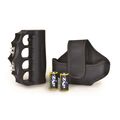
- Included belt holster. A stun baton that's buried at the bottom of a bag when you need it isn't doing its job. Quick access is part of the design here, not an add-on.
It's also backed by a 2-year manufacturer's warranty, which — for a device you might genuinely be trusting your safety to — is worth noting.
Why I Wanted to Write About It
I could just post the spec sheet and call it a day, but I think the reasoning behind the design is more interesting than the bullet points alone. A lot of stun batons on the market are built around a single idea: "make it long, make it powerful, add a light." The ZAP Baton looks like it started from a different question: what actually goes wrong in a real confrontation, and how do you design around that?
Multiple points of contact instead of one. Side shock protection so the tool can't be easily turned against you. A handle guard that's functional even beyond its protective role. A flashlight that's part of the defense strategy, not just a convenience feature. Those are the kinds of choices that come from thinking about worst-case scenarios, not just marketing copy.
I haven't run this one through my own testing yet, and I want to be upfront about that. But I've looked at enough of these products to recognize when something is engineered with more intention than usual, and this is one of those cases.
If you're in the market for a stun baton — whether you're upgrading from something more basic or looking at one for the first time — I'd genuinely encourage you to go look at the full specs and photos for yourself. You can find the ZAP Baton Stun Gun with Flashlight on our site, and I think it's worth a closer look.
As always, check your local and state laws before purchasing any self-defense device — regulations on stun guns and batons vary significantly by location, and we want you to be informed and compliant before you buy.