07/02/2026
by P. Birmingham
There was a time when getting away with a crime mostly came down to whether anyone saw you do it. If you were careful, quiet, and quick, the odds were often in your favor. That world doesn't exist anymore.
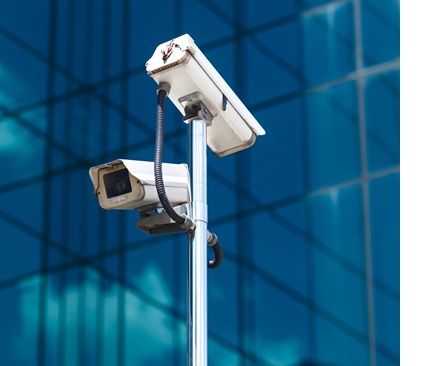
Today, nearly every action leaves a trace. Your phone knows where you've been. Cameras watch intersections, parking lots, and front porches. Your car can testify against you. Even your own DNA, shed constantly and invisibly, can place you at a scene decades after the fact. The tools available to investigators have advanced so far, so fast, that the old playbook for criminal behavior is essentially obsolete.
This isn't a lecture on morality; it's a rundown of just how much technology now stands between a crime and getting away with it. Whether you're curious about how modern investigations work, concerned about your own digital footprint, or just fascinated by the cat-and-mouse game between criminals and the systems built to catch them, here's a look at the tech that's changed the equation entirely.
1. Your Phone Is a Confession Machine
Most people don't think of their smartphone as evidence, but it might be the single most incriminating object a person can carry. Cell phones constantly communicate with nearby towers, and carriers log this data. Investigators can request cell site location information (CSLI) to reconstruct a timeline of where a phone and, presumably, its owner have been.
Beyond tower data, phones are loaded with GPS logs, Wi-Fi connection histories, app usage timestamps, and metadata embedded in photos and messages. Even "deleted" texts and call logs are frequently recoverable through mobile forensic tools like Cellebrite, which law enforcement agencies use to extract and analyze data from locked or damaged devices.
Then there's the matter of location history baked into apps themselves. Health apps track steps and routes. Maps app stores search and navigation history. Ride-share and food delivery apps log exact pickup and drop-off points. All of it can be subpoenaed, and all of it can corroborate or destroy an alibi.
2. License Plate Readers Are Everywhere
Automatic License Plate Recognition (ALPR) systems are mounted on patrol cars, bridges, toll booths, and increasingly on private security cameras and repossession vehicles. These systems scan plates at high speed, cross-reference them against databases of stolen vehicles, warrants, and Amber Alerts, and log the location and time of every single scan regardless of whether the vehicle is linked to any crime.
This means a car's movement pattern across a city, or even across state lines, can be reconstructed after the fact. A getaway vehicle doesn't need to be caught in the act; it just needs to have driven past one of these cameras at the right moment.
3. Facial Recognition and Public Camera Networks
Facial recognition technology has moved from science fiction to standard law enforcement toolkit in a remarkably short time. Police departments in many cities have access to networks of public and private surveillance cameras, and specialized software can match faces captured on video against mugshot databases, driver's license photos, and even social media profiles.
Private businesses have added to this web voluntarily. Doorbell cameras, retail security systems, and traffic cameras create overlapping fields of coverage in most urban and suburban areas. When combined with facial recognition, it becomes increasingly difficult to move through public space anonymously — especially after a crime draws investigative attention to a specific timeframe and location.
4. DNA Databases and Genetic Genealogy
DNA evidence isn't new, but the databases behind it have grown dramatically more powerful. Beyond the FBI's CODIS system, which houses DNA profiles of convicted offenders and unsolved crime scene samples, investigators now use forensic genetic genealogy the same technique that cracked the decades-old Golden State Killer case.
This method doesn't require a suspect's DNA to already be on file. Instead, investigators upload crime scene DNA to genealogy databases (with samples submitted through consumer platforms like GEDmatch) and search for partial matches among distant relatives. From there, genealogists build out family trees to narrow down a suspect, sometimes solving cases that had gone cold for thirty or forty years.
The genetic privacy implications are significant, but the investigative results speak for themselves: hundreds of previously unsolvable cases have been closed using this approach in the last several years alone.
5. Digital Forensics and the Cloud
Even criminals who avoid using their phone at the moment of a crime often can't avoid the digital trail leading up to it. Search histories revealing premeditation, purchase records for tools or weapons, browser activity, and cloud backups all create a timeline that forensic analysts can reconstruct with startling precision.
Cloud syncing in particular has become a liability for anyone trying to cover their tracks. Deleting a photo or message from a phone doesn't necessarily delete it from the cloud backup created moments earlier. Investigators with proper legal authority can request this data directly from providers, often recovering information the suspect believed was long gone.
Smart home devices add another layer entirely. Video doorbells, smart locks, and voice assistants log activity who came and went, when a door was unlocked, what was said in a room. In some cases, smart speaker recordings have been used as evidence in criminal trials.
6. Financial Tracking and Digital Payments
Cash used to be the great equalizer for criminal anonymity. Digital payments have chipped away at that significantly. Credit and debit card transactions create timestamped, location-tagged records. Even peer-to-peer payment apps like Venmo and Cash App leave a paper trail that can tie individuals to transactions, locations, and each other.
Cryptocurrency, often assumed to be untraceable, is in many ways the opposite. Blockchain ledgers are public and permanent. While wallet addresses aren't inherently tied to real identities, the moment cryptocurrency touches an exchange that requires identity verification, that anonymity often collapses. Specialized blockchain analysis firms now work directly with law enforcement to trace the flow of funds through complex transaction chains, and several major criminal cases — including large-scale fraud and ransomware operations have been cracked this way.
7. Gunshot Detection and Acoustic Sensors
In many major cities, networks of acoustic sensors are now installed throughout high-crime areas specifically to detect gunfire. These systems can pinpoint the location of a gunshot within seconds, alert police before a 911 call is even made, and provide investigators with a precise timestamp and location that can be cross-referenced with camera footage, phone data, and witness statements.
This kind of infrastructure shrinks the window in which a shooter can leave a scene undetected and dramatically speeds up the initial investigative response.
8. Predictive and Pattern-Based Policing Tools
Modern policing increasingly relies on software that analyzes crime data to identify patterns, repeat offenders, likely locations for future incidents, and connections between seemingly unrelated cases. While these tools are controversial and imperfect, they represent a shift from purely reactive investigation to a more analytical, data-driven approach.
Combined with license plate data, camera networks, and financial records, pattern-based analysis tools can help investigators connect a string of crimes to a single individual or group far faster than traditional detective work alone.
9. Social Media: The Self-Incrimination Machine
Perhaps the most avoidable mistake criminals make in the modern era is documenting themselves. Photos with visible stolen property, location check-ins, boastful posts, and even private messages have all been used as direct evidence in criminal prosecutions. Social media platforms retain data, including deleted posts and messages in many cases, and comply with valid legal requests for that information.
Beyond direct posts, metadata attached to photos and videos, such as geotags, timestamps, and device information, can independently corroborate or contradict an alibi, regardless of what the caption says.
10. Facial and Object Recognition in Retail
Retail theft, once relatively low-risk, has become significantly harder to get away with. Many stores now use AI-powered surveillance systems that can flag suspicious behavior in real time, track individuals across multiple camera angles within a store, and in some jurisdictions, cross-reference footage with facial recognition databases shared among retailers to identify repeat offenders.
The Bigger Picture
None of this means crime has become impossible to commit but it has become dramatically harder to commit without consequence. The layers of technology now surrounding daily life phones, cars, cameras, financial systems, smart devices, and social platforms create an almost unavoidable web of digital breadcrumbs. Investigators no longer need a confession or an eyewitness; they can often build an airtight case entirely from the data a person unknowingly generates just by living a normal, connected life.
For most people, none of this changes daily behavior. But it's a useful reminder of how much the world has shifted. The anonymity that once made certain crimes low-risk has largely evaporated, replaced by a surveillance and forensic ecosystem that's more thorough, more permanent, and more interconnected than most people realize.
Staying safe and staying smart isn't just about avoiding trouble it's about understanding just how visible we all are in the digital age, whether we're the victim, the witness, or, unfortunately for some, the suspect.