by P. Birmingham
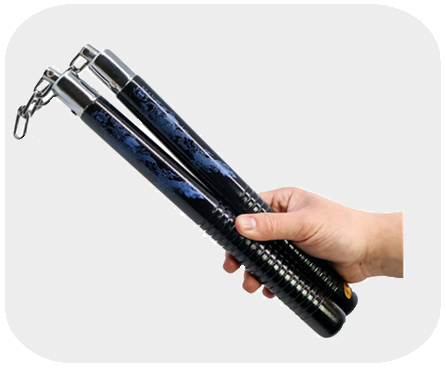 If you’re looking to buy nunchucks, the best choice depends on your experience level, training goals, and safety needs. Beginners should start with foam nunchucks for control and safety, while more experienced users can progress to wood or chain nunchucks for durability and performance.
This guide covers the history of nunchucks, how they are actually used, and how to choose the right set so you can train effectively and safely.
What Are Nunchucks?
Nunchucks (or nunchaku) are a traditional martial arts weapon made of:
They are designed for:
-
Striking
-
Control techniques
-
Coordination training
While often associated with flashy spinning, real use focuses on controlled, efficient movement.
A Brief History of Nunchucks
Nunchucks are most commonly linked to Okinawa, Japan, where they became part of kobudō, a traditional weapons system.
They likely evolved from everyday tools such as agricultural flails used for threshing crops. When weapon restrictions limited access to swords, practitioners adapted available tools for self-defense.
Nunchucks gained worldwide popularity through martial artist Bruce Lee, whose films showcased their speed and versatility. Since then, they’ve become a staple in martial arts training and demonstrations.
How Nunchucks Are Actually Used
In real training, nunchucks are not about constant spinning. They are used in three practical ways:
1. Striking
Fast, controlled strikes targeting:
2. Control Techniques
-
Wrapping limbs
-
Restricting movement
-
Assisting in disarms
3. Defensive Movements
-
Deflecting strikes
-
Redirecting force
These techniques require timing, coordination, and consistent practice.
What Training with Nunchucks Feels Like (Real Experience)
Most beginners are surprised by how technical nunchucks actually are.
Common early experiences:
-
Accidentally hitting your forearm or shoulder
-
Difficulty controlling the rebound after a strike
-
Over-gripping, which reduces fluid motion
Within the first few weeks, most people notice:
-
Improved coordination
-
Better timing
-
Increased control
However, real proficiency comes from repetition and consistency—not speed.
Choosing the Right Nunchucks
Selecting the right type is critical, especially if you’re just starting out.
1. Foam Nunchucks (Best for Beginners)
Ideal for:
-
First-time users
-
Safe practice
-
Learning basic control
Why they work:
Most beginners should start here before moving to harder materials.
2. Wood Nunchucks (Traditional Training)
Ideal for:
Benefits:
-
More realistic weight and feel
-
Better feedback on strikes
-
Durable for long-term use
These are a common next step after mastering basics.
3. Chain Nunchucks (Advanced Control & Speed)
Ideal for:
-
Experienced users
-
Faster transitions
-
Advanced techniques
Key differences:
-
Smoother rotation
-
Faster response
-
More precision required
These demand strong control and are not recommended for beginners.
Rope vs Chain: What’s the Difference?
Rope (Cord)
-
Quieter
-
More traditional
-
Slightly less durable
Chain
For most beginners, rope is easier to control. Chain becomes more useful as skill increases.
Common Buying Mistakes to Avoid
Many first-time buyers choose the wrong type. Avoid these:
1. Starting with hard materials too early
Leads to unnecessary injuries and slower progress
2. Choosing the wrong length
Too long = harder to control
Too short = limited movement
3. Focusing on appearance over function
Performance and safety matter more than style
4. Skipping beginner progression
Foam → Wood → Chain is the most effective path
How to Start Training Safely
A simple beginner approach:
Week 1–2
Week 3–4
After 1 Month
Short, consistent sessions are more effective than long, inconsistent ones.
Legal Considerations
Nunchuck laws vary depending on your location.
In some areas:
Always check your local regulations before purchasing or carrying nunchucks.
Why People Train with Nunchucks Today
Modern use is less about combat and more about skill development.
Benefits include:
-
Improved coordination
-
Faster reflexes
-
Better hand-eye control
They are also widely used in:
-
Martial arts training
-
Demonstrations
-
Fitness routines
Choosing the Best Nunchucks for You
If you’re unsure where to start:
-
Beginner: Foam nunchucks for safety and control
-
Intermediate: Wood nunchucks for realistic training
-
Advanced: Chain nunchucks for speed and precision
Most people progress through all three stages over time.
Final Thoughts
Nunchucks are more than a pop culture weapon—they are a structured training tool that develops coordination, timing, and control. While their history is rooted in Okinawan martial arts, their modern use is focused on skill-building and disciplined practice.
Choosing the right set makes a significant difference in how quickly you improve and how safely you train.
Starting with the right equipment—and progressing at the right pace—is the most effective way to get real value from nunchuck training.
See cost of nunchucks