by P. Birmingham
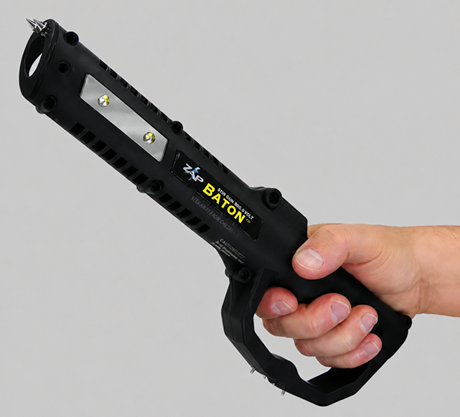
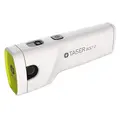
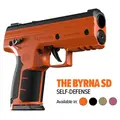
 Personal safety is often discussed in terms of self-defense tools/devices (i.e., stun guns, Tasers, pepper spray, pepper spray guns), or self-defense techniques, but the most important elements do not come from equipment. They come from mindset. A person who develops the ability to observe their surroundings, evaluate potential risks, and make quick, informed decisions is already safer than someone carrying the most advanced device but paying no attention to the world around them.
This mindset can be summarized as The 3 A’s of Personal Safety: Awareness, Assessment, and Action.
These three principles serve as a framework for anticipating danger, avoiding escalation, and responding effectively when necessary. They work in everyday environments—walking to your car, traveling to a new city, navigating a crowded event, or dealing with unexpected encounters. They also scale up to more serious emergencies.
This article explains each of the Three A’s in detail and provides practical examples, techniques, and habits you can build today to strengthen your personal safety.
1. Awareness: The Foundation of Personal Safety
Awareness is the ability to perceive what is happening around you. It means being mentally present, observing people, noting behaviors, recognizing changes in your environment, and picking up on cues that something may be “off.”
Most threats—whether criminal, environmental, or accidental—do not appear out of nowhere. They build gradually. Individuals who are aware often spot early signs before danger fully materializes.
Everyday Awareness vs. Paranoia
Awareness is not about fear. It is not about seeing threats everywhere. Instead, it is a calm, neutral habit of noticing details:
This state is sometimes called “relaxed vigilance.” It is the opposite of paranoia.
Why Awareness Matters
Awareness provides three major advantages:
-
Time – The earlier you notice something, the more options you have.
-
Control – Awareness helps you avoid situations instead of reacting to them.
-
Opportunity to escape – Many incidents become dangerous only because people didn’t see the warning signs.
Criminals often look for distracted individuals because distraction lowers reaction ability. Scammers, thieves, and predators all rely on their targets being mentally elsewhere.
Barriers to Awareness
Modern life works against awareness in several ways:
-
Phones draw attention downward and inward.
-
Headphones block auditory cues.
-
Fatigue causes mental drift.
-
Routine makes familiar environments feel “safe,” lowering vigilance.
-
Overconfidence leads to assumptions instead of observations.
A simple shift in habits can dramatically improve safety.
Techniques to Strengthen Awareness
1. The Baseline Method
Every environment has a normal behavior pattern. By identifying the baseline—what average people do—you can recognize anomalies. This is how professional security teams operate.
Baseline example:
At a coffee shop, people sit, order drinks, talk quietly, or work.
An anomaly might be someone pacing, staring excessively at patrons, or checking entrances repeatedly.
2. The 10-Second Scan
When entering a room or public area, take 10 seconds to note:
3. Look Up, Not Down
Train yourself to keep your head up when walking. Every few steps, scan ahead. If using a phone, pause and step aside instead of multitasking while moving.
4. Trust Your Intuition
Intuition is pattern recognition. If something feels wrong, it often is. Awareness includes listening to that internal signal.
2. Assessment: Evaluating What You See
Awareness identifies potential issues, but assessment determines whether they truly matter. Assessment is the second layer of personal safety, focused on interpreting information and deciding how to respond.
It involves asking:
-
Is this situation safe or unsafe?
-
What is the potential threat?
-
How likely is it to escalate?
-
What are my options?
-
What are the consequences of each option?
Assessment is about judgment, not panic.
The OODA Loop
A useful way to understand assessment is the OODA Loop, a decision model used by military and aviation professionals:
-
Observe – Gather information (Awareness).
-
Orient – Interpret the information.
-
Decide – Choose a course of action.
-
Act – Carry it out.
Effective personal safety operates within this loop, especially the orient/decide steps.
Types of Situations to Assess
1. Behavioral Cues
Certain behaviors may indicate that someone is preparing for an opportunistic crime:
-
Following you for multiple blocks
-
Changing pace to match yours
-
Approaching at an angle instead of head-on
-
Staring or scanning you frequently
-
Attempting to distract or corner you
-
Blocking exits
Assessment helps you determine whether this is coincidence or threat.
2. Environmental Cues
Assessment includes evaluating the environment:
These cues help you decide when to change your route or behavior.
3. Situational Cues
Sometimes a threat is not a person but a circumstance:
-
A bar argument escalating
-
A natural hazard forming (storm, smoke, flooding)
-
A vehicle behaving erratically
-
A sudden power outage in a public area
Assessment is about deciding what to do next based on these developments.
Risk Levels and Response
Assessment helps you categorize risks into three broad levels:
Low Risk
Something unusual but not dangerous. Example: someone walking behind you in a busy area.
Response: Stay aware, increase distance, monitor.
Moderate Risk
A situation with uncertain intent or a variable that could escalate.
Response: Change position, move to a safer area, prepare alternative options.
High Risk
Clear or imminent threat.
Response: Immediate action—escape, alert authorities, or use self-defense if unavoidable.
How to Improve Your Assessment Skills
1. Practice “If-Then” Thinking
Before entering a situation, mentally rehearse:
-
If someone follows me, then I will move to a populated area.
-
If I see an argument escalating, then I will leave the venue.
-
If I sense danger, then I will prioritize distance over confrontation.
This builds automatic decision paths.
2. Minimize Tunnel Vision
Stress narrows perception. Training yourself to take a deep breath and scan your surroundings prevents fixation on a single detail.
3. Use Distance as Your First Tool
The farther you are from a potential threat, the more time and options you have.
4. Keep Your Hands Free When Possible
If carrying many bags or distractions, you reduce your ability to respond quickly.
Assessment turns raw awareness into informed choices.
3. Action: Making the Right Move at the Right Time
Action is where preparation becomes results. It includes both preventative actions and emergency responses.
Action is not always physical. Often, the safest action is:
Physical self-defense is the last resort, not the first.
Types of Action
1. Avoidance
Avoidance is the most effective action. If a situation feels uncomfortable, leave early. Prevention is a successful outcome—not cowardice.
Examples of avoidance actions:
-
Crossing the street
-
Heading into a store if someone suspicious follows
-
Leaving a party when tension builds
-
Putting your phone away to stay alert
Avoidance preserves your safety without risk.
2. De-escalation
Sometimes tension can be lowered by non-confrontational behavior.
De-escalation strategies include:
-
Using a calm tone
-
Maintaining non-aggressive posture
-
Avoiding insults or challenges
-
Allowing the other person to save face
-
Keeping physical distance
This reduces the chance of violence and buys time to escape.
3. Boundary Setting
Clear, direct statements establish verbal boundaries.
Examples:
Delivered with a firm, steady voice and confident stance, boundary statements communicate both awareness and readiness.
4. Escape
Escape is the preferred option when a threat becomes real. The goal is to get to a safer environment and contact help.
Escape may involve:
-
Running toward populated areas
-
Entering a store or building
-
Getting to your vehicle
-
Calling emergency services
Escape prioritizes survival, not confrontation.
5. Physical Self-Defense (Last Resort)
If no other option exists and you must protect yourself, the goal is not to “win a fight” but to create an opportunity to escape.
Key principles:
-
Target vulnerable areas (eyes, nose, throat, groin, shins).
-
Use simple, high-percentage techniques.
-
Commit fully if you must strike—hesitation is dangerous.
-
Escape as soon as the attacker is disrupted.
Training in a reputable self-defense program is helpful but not required to act instinctively when needed.
How the 3 A’s Work Together
The Three A’s are not linear—they operate together dynamically.
-
Awareness tells you something is happening.
-
Assessment helps you understand what it means.
-
Action determines what you will do in response.
A person who practices the Three A’s develops a safety mindset that works in any environment.
Example Scenario 1: Parking Lot at Night
-
Awareness: You notice someone standing between cars near your vehicle.
-
Assessment: Their behavior doesn’t match the environment—they appear to be watching people.
-
Action: Change direction, return to the store, or wait until the person leaves.
Situation avoided. No confrontation needed.
Example Scenario 2: Someone Following You
-
Awareness: Footsteps behind you continue for several blocks.
-
Assessment: The person matches your pace and turns wherever you turn.
-
Action: Move toward a well-lit area or business. If they follow, call for help or alert others.
Taking action early prevents escalation.
Example Scenario 3: Road Rage Incident
-
Awareness: Another driver is gesturing aggressively.
-
Assessment: Interacting could escalate the situation.
-
Action: Avoid eye contact, change lanes, let them pass, or pull into a public place like a gas station.
Responding with calm action reduces danger.
Building the 3 A’s Into Your Lifestyle
Personal safety improves when the Three A’s become routine habits.
Habit 1: Practice Presence
Spend parts of your day device-free. Notice the environment, sounds, people, and movements.
Habit 2: Run Mental Drills
When entering a public place, ask:
This becomes automatic over time.
Habit 3: Control Your Environment
When possible:
These small actions compound to improve safety.
Habit 4: Build Confidence Through Preparation
Confidence comes from preparation—not bravado.
Learn:
-
Basic self-defense
-
How to make a strong verbal boundary
-
How to call for help effectively
-
How to stay calm under pressure
Preparedness reduces panic and speeds up decision-making.
Why the 3 A’s Are More Effective Than Gadgets
Many people rely on tools—pepper spray, alarms, or other devices. These can help, but they are secondary to mindset. Tools require:
-
Recognition of danger
-
Ability to access them quickly
-
Training to use them under stress
-
Correct judgment about when to deploy them
Without the Three A’s, tools may not be useful when needed.
A person with awareness, assessment, and action skills avoids more incidents than a person with gadgets but no alertness.
Final Thoughts
Personal safety is not about living in fear or expecting danger around every corner. It is about cultivating smart habits, increasing situational awareness, and making informed choices that reduce risk. The Three A’s—Awareness, Assessment, and Action—provide a clear framework that works in any environment, at any time, for any person.
When you adopt the Three A’s, you gain:
The goal of personal safety is not just to survive rare emergencies—it is to navigate daily life with heightened clarity, preparedness, and empowerment.
By practicing the Three A’s regularly, you strengthen your ability to recognize danger early, evaluate risks accurately, and respond effectively. Personal safety becomes second nature, and your everyday world becomes safer.