by P. Birmingham
 Understanding the Legal Landscape for Stun Guns and Tasers
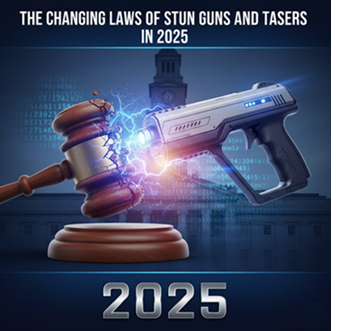
In recent years, the laws surrounding stun guns and Tasers in the United States have evolved rapidly. Once banned or heavily restricted in many states, these non-lethal self-defense weapons are now the focus of heated debates among lawmakers, law enforcement, and citizens. The year 2025 has brought a new wave of legal updates, restrictions, and regulatory reforms aimed at balancing public safety with individual rights.
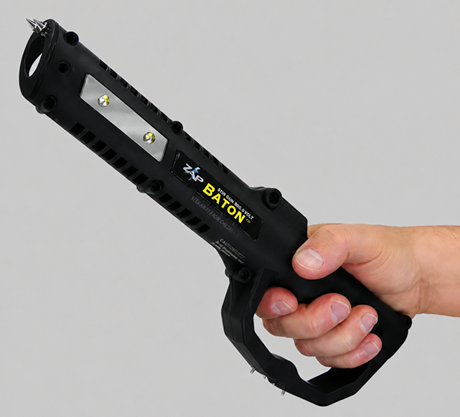
Stun guns and Tasers are categorized as “electronic control weapons.” While both serve to incapacitate targets using electricity, they differ in mechanism. Stun guns require direct contact, while Tasers can fire barbed projectiles connected by wires, allowing the user to stop an aggressor from several feet away. Despite their popularity for self-defense and law enforcement, misuse and safety concerns have led to increased scrutiny.
This article explores the latest legal changes across the United States, notable state legislation, and what individuals and law enforcement officers need to know going forward.
Why Laws Are Changing
Several factors are driving new regulations for stun guns and Tasers. First, incidents involving excessive or inappropriate use by law enforcement have drawn national attention. Second, the growing civilian market for self-defense tools has outpaced existing legislation, leading states to update outdated bans. Third, recent court cases have questioned whether restrictions on these devices violate Second Amendment protections.
Technology is also changing. Modern devices come with safety chips, digital logs, and improved accuracy, reducing injury risk compared to early models. Legislators are now reconsidering total bans in favor of controlled regulation, licensing, and training requirements.
The common goal across jurisdictions is to create laws that protect citizens’ right to self-defense while minimizing harm and misuse.
Alabama: Limiting Taser Use on Restrained Individuals
In 2025, Alabama passed Senate Bill 23, which explicitly restricts law enforcement officers from using Tasers or similar electronic control devices on individuals who are already restrained. The bill, taking effect on October 1, 2025, defines “restrained” as being handcuffed, shackled, or otherwise physically immobilized.
This change responds to incidents where individuals in custody were injured after being shocked while restrained. The new rule strengthens accountability for officers, clarifies departmental policies, and ensures compliance with evolving national standards on use of force.
For civilians, Alabama law still allows possession of stun guns and Tasers for self-defense, provided they are not used criminally or carried in restricted public spaces.
Mississippi: Banning and Regulating Taser Use
Mississippi has seen two major bills in 2025 regarding electronic weapons.
House Bill 1596 is one of the most restrictive proposals nationwide. It prohibits law enforcement from using, possessing, or deploying Tasers and stun guns altogether. Agencies are required to remove the devices from service by June 30, 2025, and transfer them to the Department of Public Safety.
This bill reflects rising concern about fatalities and injuries linked to electronic weapon use, as well as calls for alternative de-escalation techniques. However, the measure remains controversial. Critics argue that eliminating these tools may force officers to rely more on lethal weapons, defeating the goal of harm reduction.
The second proposal, Senate Bill 2317, takes a more moderate approach. It does not ban Tasers but instead requires all law enforcement officers to undergo certified training, report every use, and document circumstances, outcomes, and injuries. The law also restricts use against vulnerable populations such as pregnant individuals, minors, and the elderly.
These two Mississippi bills represent the two extremes of current policy thinking—total prohibition versus structured regulation. The outcome will likely influence future national debates on electronic control devices.
New York: Balancing Self-Defense and Public Safety
New York has long had some of the strictest laws regarding stun guns and Tasers. For years, civilian possession was entirely prohibited, but court challenges and public pressure have begun to reshape the conversation.
In 2025, Senate Bill 3833 seeks to modernize these restrictions by allowing the possession and sale of electronic stun and dart guns under regulated conditions. The bill establishes safety standards for manufacturers, requires clear labeling, and limits ownership to individuals over 18 with clean criminal records.
Despite this reform movement, legal battles continue. A recent federal case, Calce v. City of New York, upheld certain city-level restrictions, finding that complete bans on stun guns did not violate the Second Amendment. This decision contrasts with rulings in other states where courts have struck down total bans as unconstitutional.
The outcome of these ongoing cases will determine whether New York’s cautious move toward legalization will expand or be rolled back.
Hawaii: Reporting and Oversight
Hawaii has adopted one of the most structured regulatory frameworks for stun guns and Tasers. The state legalized possession for civilians in 2022 but imposed strict conditions: purchasers must be 21 or older, pass a background check, and complete safety training.
In 2025, the Hawaii Attorney General’s Office introduced new reporting requirements for all law enforcement agencies that possess or use electric guns. These reports must detail the number of devices in use, the number of discharges, and any resulting injuries.
The data-driven approach allows the state to monitor how these tools are used and evaluate their effectiveness and safety. It also enhances public transparency, ensuring misuse is tracked and addressed.
Court Challenges and the Second Amendment
The legal treatment of stun guns and Tasers often intersects with constitutional debates over the right to bear arms. The U.S. Supreme Court’s 2016 decision in Caetano v. Massachusetts was a key turning point, ruling that stun guns are protected under the Second Amendment. However, the ruling left states with significant regulatory discretion.
Since then, state and federal courts have issued mixed rulings. Some have struck down total bans as unconstitutional, while others upheld restrictions based on public safety. These divergent outcomes have created a patchwork of laws that vary dramatically across states.
In 2025, legal experts expect further litigation as new state bans and restrictions face challenges from civil rights groups. The outcome could set important national precedents on whether non-lethal weapons receive the same constitutional protection as firearms.
Civilian Self-Defense: Expanding Access with Caution
Across the country, more states are allowing civilians to carry stun guns and Tasers for personal protection. Proponents argue these tools offer an effective non-lethal alternative to firearms, especially for people who want to defend themselves without resorting to deadly force.
Still, concerns persist. Misuse in domestic disputes, accidental discharges, and lack of training have prompted states to include safety education in their legislation. Some states require registration, background checks, or permits similar to firearm licensing.
Manufacturers are also introducing “smart” features, such as device tracking, time-stamped firing logs, and automatic deactivation after multiple discharges. These innovations may help reassure lawmakers and the public that electronic control devices can be safely integrated into civilian defense.
The Role of Law Enforcement
For police, Tasers remain a double-edged sword. They are a critical tool for subduing violent suspects without lethal force, yet they carry reputational and legal risks when misused. Many departments now review every use of a Taser, requiring body camera footage and written justifications.
Training standards are shifting as well. Instead of emphasizing compliance through pain, newer programs stress de-escalation and medical awareness. Officers are taught to assess medical conditions, avoid vulnerable body areas, and minimize repeated shocks.
Some states, like Mississippi, are going further by considering bans or strict reporting mandates. Others, like Alabama, are narrowing permissible use cases. Together, these trends signal a national reevaluation of how law enforcement uses non-lethal force in an age of heightened public scrutiny.
Industry and Technology Developments
The companies that manufacture Tasers and stun guns, most notably Axon (formerly Taser International), are responding to legal changes by emphasizing accountability and data collection. Modern devices can connect to digital evidence systems, automatically upload firing data, and synchronize with body cameras.
This technology helps departments defend against lawsuits and demonstrates compliance with use-of-force standards. For civilians, similar innovations improve product safety by preventing unauthorized use and recording incidents for legal protection.
However, critics argue that even advanced devices can still cause cardiac events, particularly when used repeatedly or against vulnerable individuals. Medical research remains divided, though most studies agree the risk is significantly lower than from firearms.
The Future of Stun Gun Legislation
The coming years will likely see further refinement rather than total bans or deregulation. States are moving toward nuanced, tiered frameworks that distinguish between civilian and law enforcement use.
Expect to see more:
-
Mandatory training and certification programs
-
Registration or background checks for buyers
-
Enhanced reporting and data transparency
-
Clear prohibitions on use against specific groups (restrained individuals, minors, etc.)
-
Integration of smart technology for tracking and safety
Federal oversight remains limited, but as state laws evolve, the pressure may grow for national standards or guidance.
The balance between security and liberty will continue to shape how stun guns and Tasers are viewed—not as symbols of force, but as tools demanding responsible use.
What Citizens Should Know in 2025
For individuals considering purchasing or carrying a stun gun or Taser in 2025, understanding local laws is essential. Regulations differ by state, city, and even county. Some jurisdictions require training and permits, while others ban possession altogether.
Key steps for compliance include:
-
Checking state and municipal codes before purchase.
-
Buying only from authorized dealers.
-
Completing safety training where required.
-
Using the device solely for lawful self-defense.
-
Avoiding carry in schools, government buildings, and restricted zones.
Ignorance of the law is not a defense. Because laws are evolving, staying informed is the best protection against legal penalties.
Conclusion
Stun guns and Tasers occupy a complex place in American law—tools of empowerment for civilians and restraint for police. The recent legislative changes in Alabama, Mississippi, New York, and Hawaii reflect a growing national effort to refine their use rather than eliminate it.
The trend points toward accountability, safety, and controlled access. As technology advances and legal debates continue, the line between self-defense and public safety will remain under review.
Citizens, officers, and lawmakers all share responsibility for ensuring that these devices are used wisely, lawfully, and ethically. The 2025 wave of legal reforms is not the end of the conversation—it is the beginning of a more informed and transparent era in non-lethal defense.