by P. Birmingham
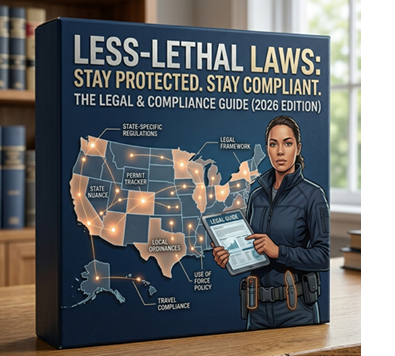 Pepper spray. Stun guns. Tasers. Tactical pens. Personal alarms. Pocket knives. For millions of Americans, these tools represent a middle path between doing nothing and carrying a firearm. They're affordable, they don't require a federal background check, and many people assume they're "legal everywhere."
That last assumption can land you in court.
The legal landscape for non-lethal — or, more accurately, less-lethal — self-defense tools is a patchwork of state statutes, local ordinances, age limits, canister-size caps, permit requirements, and prohibited locations that varies dramatically across state lines. A pepper spray canister that's perfectly legal in Houston can result in misdemeanor charges in parts of Wisconsin. A stun gun you bought in Florida may be unwelcome in certain Delaware cities. And a folding knife that's a routine pocket tool in Texas may trigger questions from law enforcement in New Jersey.
This guide walks you through what you need to know to carry legally and confidently in 2026 — organized by tool category and by state, with the most recent updates flagged.
A Note on Terminology: "Non-Lethal" vs. "Less-Lethal"
Before we get into specifics, language matters here. Industry professionals and law enforcement increasingly use the term less-lethal rather than non-lethal. The reasoning, as explained by U.S. Concealed Carry Association instructors, is that any weapon — regardless of intended force level — has the potential to be lethal under certain circumstances. Pepper spray has been linked to deaths involving people with severe asthma. Stun guns have caused cardiac events in rare cases. Even a small folding knife can produce a fatal wound.
Why does this matter legally? Because prosecutors and civil litigators don't care what marketers call a product. They care about how the device is classified under state law and how it was used. Understanding this distinction helps you make better decisions about training, deployment, and the legal aftermath of any defensive incident.
The Federal Layer: What Applies Everywhere
Most less-lethal weapon regulation happens at the state level, but a few federal rules apply universally:
Air travel. The Transportation Security Administration prohibits stun guns, some pepper sprays, and most knives in carry-on luggage. Some pepper sprays may be permitted in checked baggage if they meet TSA size and labeling requirements, but airline policies vary, and most carriers ban them entirely. Pepper spray on a commercial aircraft is treated as a federal offense with potential fines up to $25,000. Per TSA's website,"One 4 fl. oz. (118 ml) container of mace or pepper spray is permitted in checked baggage provided it is equipped with a safety mechanism to prevent accidental discharge. Self-defense sprays containing more than 2 percent by mass of tear gas (CS or CN) are prohibited in checked baggage. For more information, visit faa.gov."
Federal property. Courthouses, post offices, military bases, and federal buildings are no-go zones for virtually every self-defense tool, including knives and sprays — regardless of what your state allows.
Schools. Federal law (the Gun-Free School Zones Act) addresses firearms, but nearly every state independently prohibits less-lethal weapons on K-12 school property. Most states — including Alabama, California, Florida, Illinois, Michigan, Pennsylvania, Tennessee, and Texas — prohibit knives on school property regardless of blade length.
Mail and shipping. The U.S. Postal Service prohibits mailing pepper spray, switchblades to most addressees, and ballistic knives. Private carriers like UPS and FedEx ship most legal less-lethal products but still observe destination-state restrictions.
Pepper Spray Laws: State-by-State Highlights
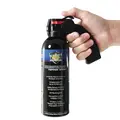
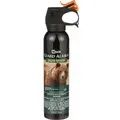
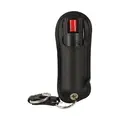
Pepper spray is the most widely legal self-defense tool in the United States. It is legal in all 50 states and Washington D.C. for self-defense purposes, though some states impose conditions and restrictions. Here's where the variation gets sharp:
The strictest states:
- New York. Pepper spray must be purchased in person from a licensed firearms dealer or pharmacy — online sales and shipping into the state are prohibited. New York also restricts consumers to a maximum of two pepper sprays per purchase.
- California. Canister size is limited to 2.5 ounces, purchases must be made through licensed retailers within the state, and shipping pepper spray into California is restricted.
- Hawaii. Requires a permit, age 21+, and prohibits online sales.
- Wisconsin. Imposes specific size and concentration limits that make many commercially available products technically non-compliant.
Permissive states:
States like Texas, Florida, Arizona, Georgia, Tennessee, and most of the South and Mountain West allow adult civilians to purchase and carry standard pepper spray with minimal restrictions beyond age (typically 18+) and the standard prohibition on felons and use during a crime.
Common rules across most states:
- Must be 18+ to purchase (some states allow 14–17-year-olds with parental consent)
- Felons and those with assault convictions are typically barred
- Use is restricted to lawful self-defense; offensive use is prosecuted as assault
- Schools, courthouses, airports, and government buildings are off-limits
- Carrying pepper spray on commercial airlines is a felony with fines up to $25,000
Stun Guns and Tasers: A Rapidly Evolving Patchwork
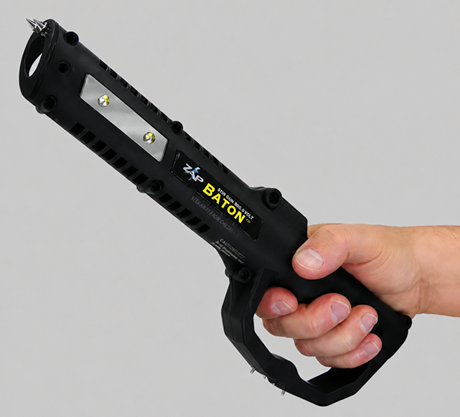
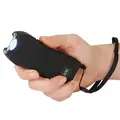
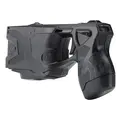
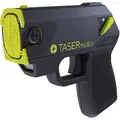
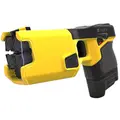
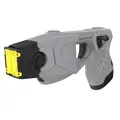
Stun guns (contact devices) and Tasers (probe-firing devices) are often regulated together but treated differently in some states. The legal map shifted dramatically over the past decade after a series of federal court rulings struck down outright bans.
Where stun guns are now legal nationwide:
As of October 2023, stun guns are technically legal in all 50 states. Hawaii and Rhode Island were the last states to ban ownership of stun guns and Tasers, and both bans have since been overturned. As of early 2026, the Rhode Island legislature has been actively processing bills (such as HB 7650 and HB 8072) to codify the legality for adults 18+ formally. Possession is generally considered legal following the court's ruling, though specific permitting regulations are still being finalized. Hawaii legalized electric guns on January 1, 2022 with the passage of House Bill 891, and in March 2023 a federal judge ruled Rhode Island's stun gun ban unconstitutional.
States with significant restrictions:
- Illinois. Legal with a valid Firearm Owner's Identification (FOID) card for adults 18+. Restrictions apply in schools, public transit, and government buildings.
- Massachusetts. Legal with a firearms license for adults 18+.
- Connecticut. Legal but the user must have a valid gun permit and be at least 21 years of age.
- Delaware. Requires age 21+, a background check, no felony convictions, and stun guns remain illegal in Newark, Wilmington, and New Castle County.
- Michigan. Generally requires a Concealed Pistol License to carry a stun gun outside one's home.
- Wisconsin. A valid permit is required, and the device must be carried in a closed case.
Common location bans:
Georgia, Kansas, New Jersey, North Carolina, Virginia, Washington, Wisconsin, and the District of Columbia all ban Tasers from school property. Virginia also bans them in airports, courthouses, and buses. Background checks are required to purchase a Taser in Hawaii, Maryland, Massachusetts, and Minnesota.
If you're shopping online, reputable retailers will block shipments to restricted states automatically — but the legal responsibility for compliance still rests with the buyer.
Knife Laws: Where Tradition Meets Confusion
Knife laws are arguably the most confusing area of less-lethal regulation because they involve overlapping variables: blade length, knife type, carry method (open vs. concealed), age, intent, and local preemption.
The trend in 2026: loosening restrictions.
Several states have liberalized knife laws over the past three years. Once banned in over 40 states, switchblades are now legal to carry in more than half the country, with states including Pennsylvania, Virginia, and New Mexico rolling back their bans. Texas now allows open carry of knives with blades longer than 5.5 inches, and Florida has removed its 4-inch limit for concealed carry. In 2026, states like Ohio and Michigan passed new preemption laws ensuring consistency across cities and counties.
The strictest states for knife carry:
- New Jersey. Possession of gravity knives, switchblades, daggers, dirks, stilettos, or ballistic knives without an explainable lawful purpose is a fourth-degree crime, and courts have held that carrying a knife for self-defense outside the home is not a lawful purpose.
- New York. New York City in particular interprets knife laws aggressively. Even after gravity-knife reform, NYC remains the most enforcement-heavy jurisdiction in the country.
- Hawaii. Switchblades and butterfly knives are illegal; many other knives are restricted by design.
- California. Concealed carry of dirks and daggers is a crime under Penal Code § 21310, and switchblades with blades of two inches or more are restricted in public.
The general framework most states use:
Most states permit folding knives with blades under 3 inches for both open and concealed carry by adults. Beyond that, rules diverge based on:
- Whether the knife opens automatically (switchblade laws)
- Whether the blade is fixed or folding
- Whether it's carried openly or concealed
- Whether your state has preemption — meaning local cities can't add their own rules
States with statewide preemption — including Alaska, Arizona, Arkansas, Georgia, Tennessee, and Wisconsin — block local governments from creating additional knife restrictions beyond state law. States without preemption (notably California, Colorado, Florida, and New York) allow cities to layer on their own rules.
Other Common Tools: Quick Reference
Personal alarms. Legal in all 50 states with no age restriction or permit requirement. The lowest-friction option for travelers.
Tactical flashlights. Legal everywhere. Not classified as a weapon under any state statute.
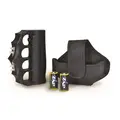
Brass knuckles. Legal in Texas (since 2019), Arkansas, Montana, Tennessee, and several others. Still illegal in California, Illinois, New York, Massachusetts, and Michigan, among others. Always verify locally.
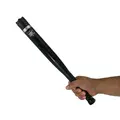
Self-defense batons / expandable batons. Tightly regulated in many states. Legal in most of the South and Mountain West, but restricted or banned without a permit in California, New York, Massachusetts, and several other states.
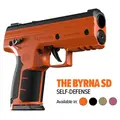
Less-lethal launchers (e.g., Byrna). These CO2-powered devices are legal in all 50 states and don't require permits or background checks at the federal level, though some states regulate the projectiles or include them under broader weapons statutes.
Use of Force: The Legal Standard That Applies to Every Tool
Carrying a legal weapon is only half the equation. The use of any defensive tool — even a "non-lethal" one — must meet your state's self-defense standard.
In general, lawful use of force in self-defense requires:
- An imminent threat. You can't preemptively use force based on what someone might do.
- Proportional response. The force you use must roughly match the threat you face.
- Reasonable belief. A jury must accept that a reasonable person in your position would have responded similarly.
- No duty to retreat in some states. "Stand Your Ground" states (Florida, Texas, Georgia, and roughly 30 others) eliminate the requirement to retreat. "Duty to retreat" states (New York, Massachusetts, New Jersey) generally require you to retreat if safely possible before using force outside your home.
The "Castle Doctrine" — which protects your right to defend yourself inside your home without retreating — exists in nearly every state, though the specifics vary.
If you use any less-lethal tool offensively, in anger, or after the threat has ended, you can face assault, battery, or even homicide charges. The legal aftermath of a defensive encounter is often longer, more expensive, and more life-altering than the encounter itself.
Practical Compliance Checklist for 2026
Before you carry any less-lethal weapon, run through this checklist:
- Check state law first, then check city and county ordinances. State permission doesn't override local bans.
- Verify age requirements. Most tools require 18+; some (like Connecticut stun guns) require 21+.
- Confirm purchase channel. Some states (NY, Hawaii, Massachusetts) require in-person, licensed purchases.
- Know prohibited locations. Schools, courthouses, airports, federal buildings, and many bars are off-limits across most states.
- Plan for travel. When driving across state lines, assume the most restrictive state on your route is the standard you must meet. Store devices in the trunk or glove compartment when transiting restrictive jurisdictions.
- Train before you carry. Knowing the law is necessary but not sufficient. You also need to know how to deploy your tool under stress without making the situation worse.
- Document your purchase. Keep receipts and any age-verification records, especially in restrictive states.
Where to Verify Current Law
Because laws change — sometimes mid-year, sometimes mid-litigation — always cross-check with primary sources before making decisions:
- Your state legislature's official statute database
- Your state attorney general's office
- Your local police department's non-emergency line
- A licensed attorney in your state who handles weapons cases
Reputable secondary sources like the American Knife and Tool Institute, the U.S. LawShield network, and state bar association consumer-information pages can also help, but always trace the citation back to the actual statute.
Final Thoughts
The single most important lesson from researching less-lethal laws across all 50 states in 2026 is this: legality is geographic, temporal, and contextual. The same product can be lawful in one ZIP code and a misdemeanor charge two miles away. A stun gun legal today may face new restrictions next legislative session. And a tool you carried lawfully yesterday can become evidence against you tomorrow if it's used in a way that doesn't meet your state's self-defense standard.
Carrying responsibly means investing roughly the same amount of effort into understanding the law as you do into selecting the product. The good news: most of the information you need is publicly available, and a few hours of research before purchasing can save you years of legal headaches afterward.
Stay informed. Stay trained. Stay within the law.
About sourcing: Information in this guide is drawn from state legal databases, the American Knife and Tool Institute, U.S. LawShield educational materials, the Transportation Security Administration, and state-by-state summaries verified against published statutes through April 2026.
Important disclaimer: This guide provides general legal information for educational purposes. It is not legal advice. Laws change frequently, and local ordinances may impose stricter rules than state statutes. Always verify the current law in your specific city, county, and state — and consult a licensed attorney before relying on any of this information for a real-world decision.