by P. Birmingham
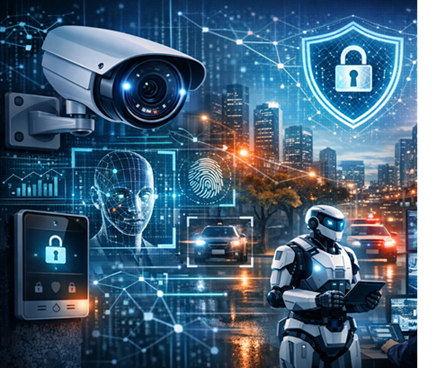 Security has evolved dramatically over the past two decades. What began as simple alarm systems and closed-circuit cameras has transformed into intelligent, adaptive, and predictive networks powered by artificial intelligence (AI). Automated security systems using AI are no longer experimental—they are being deployed in homes, businesses, factories, schools, and cities worldwide.
This article explores how AI-driven security systems work, where they are used, their benefits and limitations, and what the future of intelligent protection looks like.
What Is an Automated AI Security System?
An automated AI security system combines hardware (cameras, sensors, locks, alarms) with machine learning algorithms and cloud-based processing to detect, analyze, and respond to threats in real time.
Traditional systems:
AI-powered systems:
-
Understand what the motion represents.
-
Differentiate between normal and suspicious behavior.
-
Learn patterns over time.
-
Initiate context-aware responses.
Instead of simply alerting when something moves, AI security systems attempt to determine what moved, why it moved, and whether it poses a threat.
Core Components of AI Security Systems
Automated AI security platforms typically include several integrated layers:
1. Smart Sensors and Cameras
Modern systems use high-resolution cameras and advanced sensors including:
-
Infrared night vision
-
Thermal imaging
-
Lidar
-
Acoustic sensors
-
Motion detectors
Devices such as the Ring Video Doorbell and the Google Nest Cam incorporate AI-based motion detection that distinguishes between people, animals, and vehicles.
2. Computer Vision and Object Recognition
AI models trained on large image datasets allow systems to:
Facial recognition technology, while controversial, is deployed in some government and commercial settings to enhance identity verification.
3. Machine Learning Algorithms
Machine learning enables systems to adapt. Over time, AI can:
For example, if a warehouse typically has activity from 8 AM to 6 PM, movement at 2 AM would be flagged as abnormal.
4. Automated Response Systems
AI security platforms are designed to trigger actions automatically:
Advanced systems can integrate with smart home ecosystems such as Amazon Alexa or Google Home, allowing voice-triggered lockdown protocols.
Key Applications of AI-Powered Security
1. Residential Security
In homes, AI systems provide:
Instead of generic motion alerts, homeowners receive detailed notifications such as: “Person detected at front door” or “Vehicle parked in driveway.”
AI also helps reduce nuisance alerts caused by pets, weather, or passing traffic.
2. Commercial and Retail Security
Retail theft and organized shoplifting have become major challenges. AI systems can:
-
Detect suspicious behavior patterns.
-
Monitor customer dwell time near high-value items.
-
Identify repeat offenders (where legally permitted).
Large retail environments deploy AI surveillance platforms that integrate analytics across multiple cameras, reducing the need for constant human monitoring.
3. Industrial and Warehouse Protection
Industrial facilities benefit from AI security through:
-
Perimeter intrusion detection.
-
Fire and smoke pattern recognition.
-
Hazardous behavior identification (e.g., workers not wearing protective equipment).
AI can integrate with industrial IoT devices to monitor not just intruders, but safety compliance and operational risks.
4. Corporate and Campus Environments
Corporate campuses use AI-driven access control systems that:
-
Verify identities via facial recognition.
-
Track badge access patterns.
-
Detect tailgating (unauthorized entry behind authorized personnel).
These systems help mitigate insider threats and unauthorized access.
5. Smart Cities and Public Safety
AI security systems are increasingly used in public infrastructure to:
-
Monitor traffic patterns.
-
Detect accidents.
-
Identify crowd surges during large events.
-
Recognize abandoned objects.
While controversial, some municipalities deploy facial recognition in transportation hubs to identify persons of interest.
Benefits of AI-Based Automated Security
1. Reduced False Alarms
False alarms are costly and erode trust in security systems. AI improves detection accuracy by filtering out irrelevant events.
2. 24/7 Monitoring Without Fatigue
Human operators become fatigued. AI systems analyze video streams continuously without breaks, increasing reliability.
3. Faster Response Times
Automation allows immediate action:
Seconds matter in emergencies.
4. Cost Efficiency Over Time
Although AI systems require upfront investment, they reduce long-term costs by:
5. Predictive Threat Detection
Some AI models analyze historical data to predict:
Predictive analytics shifts security from reactive to proactive.
Challenges and Concerns
Despite benefits, AI security systems raise significant concerns.
Privacy Issues
AI surveillance collects vast amounts of data. Questions arise:
-
Who owns the data?
-
How long is it stored?
-
Who can access it?
Regulations such as the EU’s GDPR impose strict requirements on data usage and consent.
Bias and Accuracy Problems
Facial recognition systems have shown performance disparities across demographic groups. Misidentification can lead to serious consequences.
AI models must be trained on diverse datasets and continuously audited.
Cybersecurity Risks
AI security systems themselves can be targeted by hackers. If compromised, attackers could:
Robust encryption and cybersecurity practices are essential.
Over-Reliance on Automation
Automation should augment—not replace—human judgment. Systems must include manual override options and clear escalation protocols.
Integration with Broader Security Infrastructure
The real power of AI security lies in integration.
Cloud Computing
Cloud-based platforms process massive amounts of video data and deploy updated AI models instantly across networks.
Edge Computing
Edge AI allows processing directly on devices, reducing latency and enhancing privacy by limiting cloud transmission.
IoT Ecosystems
AI security integrates with:
-
Smart locks
-
Motion sensors
-
Environmental monitors
-
Alarm panels
This creates a coordinated response network rather than isolated devices.
Real-World AI Security Providers
Several companies are driving innovation in this space:
-
ADT integrates smart monitoring with AI analytics.
-
Verkada provides enterprise-grade AI video analytics.
-
Hikvision manufactures AI-enhanced surveillance hardware used globally.
-
Palantir Technologies develops data integration tools used in government and enterprise security environments.
Each company focuses on different layers of AI security—from hardware manufacturing to large-scale data analytics.
The Future of AI in Security
AI security is moving toward greater autonomy and intelligence.
Behavioral Analysis
Future systems will identify pre-incident indicators such as:
Multimodal AI
Combining video, audio, motion, and environmental sensors will improve contextual understanding.
Autonomous Security Robotics
Security robots equipped with AI vision and mobility may patrol environments and provide mobile surveillance.
Federated Learning
To address privacy concerns, federated learning allows AI models to train across multiple devices without centralizing sensitive data.
Regulatory Frameworks
Governments are beginning to regulate AI surveillance. Standardization and oversight will shape adoption.
Strategic Considerations for Businesses
For organizations considering AI security systems, key evaluation factors include:
A phased implementation often reduces operational disruption.
Ethical Deployment Principles
Responsible AI security deployment should follow these principles:
-
Transparency about surveillance.
-
Clear data retention policies.
-
Regular auditing for bias and performance.
-
Human oversight in high-stakes decisions.
-
Proportional use of technology relative to risk.
Security should enhance safety without compromising civil liberties.
Conclusion
Automated security systems using AI represent a significant advancement in personal, commercial, and public safety. By combining intelligent sensors, machine learning, real-time analytics, and automated responses, these systems move beyond simple detection toward proactive threat management.
However, the deployment of AI security requires careful consideration of privacy, ethics, cybersecurity, and regulatory compliance. The most effective systems will balance automation with human oversight, leveraging AI to extend human capabilities rather than replace them.
As technology continues to mature, AI-powered security will become more accurate, more predictive, and more integrated into everyday infrastructure—reshaping how we think about protection in a connected world.
Related Articles: